The Sapphire’s Enduring Legacy: From Royal Crowns to Modern Portfolios
Few gemstones carry the cultural weight of the sapphire. For more than three thousand years, this stone has moved between temples, treasuries, and trading houses, accumulating a body of meaning that no marketing campaign could manufacture. Long before modern collectors began tracking auction results and laboratory reports, sapphires were already considered objects of consequence, worn by clergy who believed they protected against impure thoughts, set into the rings of medieval kings as symbols of divine favor, and carried by Persian merchants who held that the earth itself rested upon a giant sapphire whose reflection gave the sky its color. That kind of cultural inheritance is not incidental to the modern market. It is the foundation of it.
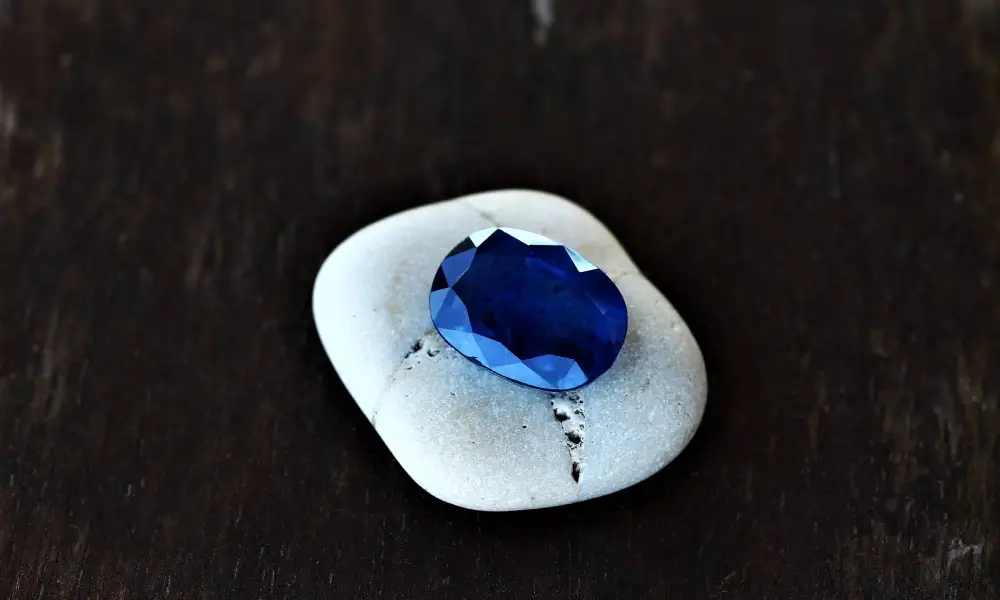
Mineralogically, sapphire belongs to the corundum family, the crystalline form of aluminum oxide. The stone registers 9 on the Mohs hardness scale, surpassed only by diamond and moissanite, which is part of the reason it has survived as a wearable heirloom across generations when softer stones have chipped, fractured, or worn down to nothing. Trace elements introduced during crystal formation produce the colors collectors prize. Iron and titanium yield the classic blues that define the category in most buyers’ minds. Chromium produces the pinks. Vanadium can produce color-change varieties that shift from blue under daylight to violet under incandescent light. Every sapphire at auction is, in a sense, a record of the geological accident that formed it, which is one reason no two fine examples are ever quite alike.
The sapphire’s institutional pedigree is unmatched in the colored stone world. The British Crown Jewels contain the Stuart Sapphire, the St. Edward’s Sapphire mounted at the cross of the Imperial State Crown, and the so-called Black Prince’s curiosity cabinet of historical pieces accumulated across centuries of acquisition and conquest. The Smithsonian holds the 422.99-carat Logan Sapphire, one of the largest faceted blue sapphires in the world. The American Museum of Natural History’s Star of India draws crowds who may never have considered buying a gemstone but understand intuitively that they are looking at something significant. These public collections do more than display stones. They establish the upper register of the market, the reference points against which every privately held example is implicitly measured.
The modern catalyst for renewed collector interest is more recent and more familiar.
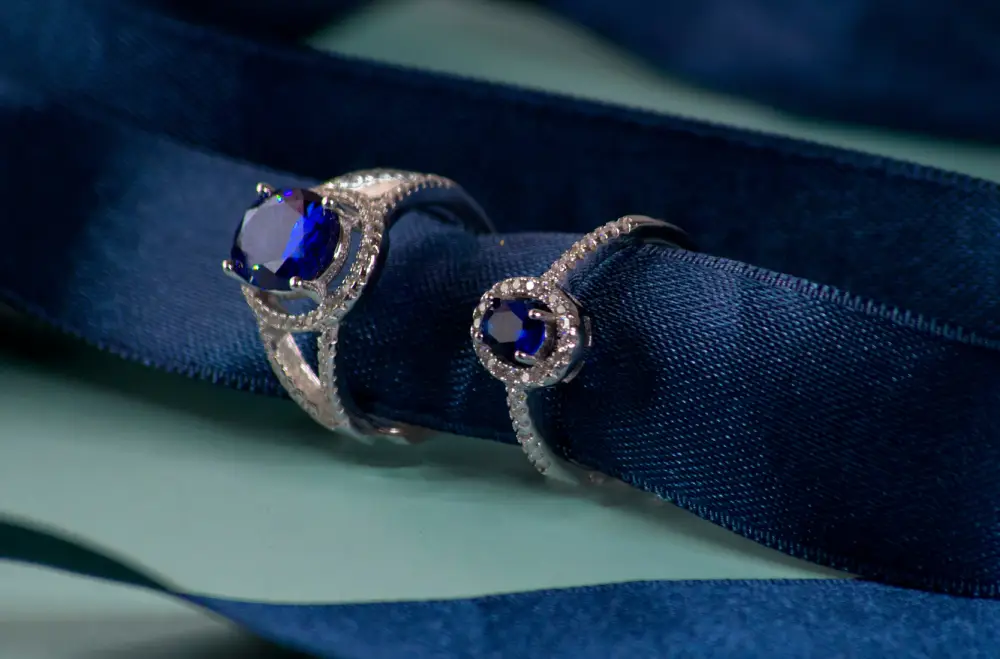
When Prince Charles selected a 12-carat oval Ceylon sapphire surrounded by diamonds for his engagement to Lady Diana Spencer in 1981, and when that same ring later appeared on the hand of Catherine, Duchess of Cambridge, the sapphire reentered popular consciousness as the engagement stone for those who consider diamonds either too conventional or too commercially manipulated. Auction houses noticed. So did mining companies, dealers, and the laboratories whose origin reports increasingly determine whether a stone sells in the four, five, six, or seven figure range.
What makes sapphires particularly interesting to the contemporary collector is that they occupy a rare intersection. They are simultaneously objects of mineralogical study, art-historical importance, and serious investment-grade assets with documented price performance. Most categories that auction houses handle satisfy one or two of these criteria. Sapphires satisfy all three, which is why they appear with such regularity in major jewelry sales and why a properly assembled sapphire collection can serve as both family heirloom and portfolio diversifier. The sections that follow examine how to read this market, what separates a $5,000 stone from a $500,000 stone, and how serious buyers approach acquisition without making the mistakes that turn enthusiasm into expensive education.
Understanding Sapphire Varieties: Why Origin and Color Define Everything
The first lesson any serious sapphire collector learns is that the word “sapphire” by itself tells you almost nothing. Two stones of identical weight, color, and clarity can sell for prices an order of magnitude apart based solely on where they came out of the ground and what color family they belong to. This is not a quirk of the market. It reflects genuine differences in scarcity, optical properties, and the geological conditions that produced each stone. Understanding the major varieties is the difference between buying intelligently and buying expensively.
Kashmir Sapphires sit at the apex of the entire colored gemstone market. Discovered in the Padar region of the Himalayas around 1881 after a landslide exposed the deposit, the Kashmir mines produced commercially viable material for roughly four decades before output collapsed in the 1920s. What emerged during that brief window has never been matched. Kashmir stones display a distinctive cornflower blue with a velvety, almost sleepy quality produced by microscopic inclusions that scatter light internally. Fine examples regularly cross $200,000 per carat at major auctions, and exceptional stones have sold for substantially more. Because supply is essentially fixed, with new material appearing only when older collections come to market, Kashmir sapphires function less like a commodity and more like a closed-end fund.
Burmese (Myanmar) Sapphires from the Mogok Valley represent the second tier of the classical hierarchy, though “second” understates their desirability. The finest Burmese material shows a saturated royal blue with strong fluorescence that gives the stone an internal glow under sunlight. The Mogok mines have produced sapphires for centuries alongside their better-known ruby output, and the trade descriptor “Burmese sapphire” carries enough weight that origin documentation from a respected laboratory can double or triple a stone’s value. Political complications around Myanmar mining have added a layer of due diligence that serious buyers must navigate carefully.
Ceylon (Sri Lankan) Sapphires form the historical backbone of the trade. The island has produced sapphires continuously for more than two thousand years, and Ceylon material spans an enormous range from pale blue to vivid royal blue, with the lighter cornflower tones being most associated with the origin. Ceylon stones tend to be cleaner than Kashmir or Burmese material and are often cut for maximum brilliance rather than maximum color saturation. They offer the best entry point for collectors who want classical origin documentation without Kashmir-level pricing.
Madagascar Sapphires transformed the market beginning in the late 1990s when significant deposits were discovered in the Ilakaka region. Madagascar now produces a substantial percentage of the world’s sapphire supply, and the finest material rivals classical origins in color and clarity. Some Madagascar stones have even been mistaken for Kashmir material in blind comparison, which has prompted laboratories to refine their origin determination protocols. For collectors, Madagascar represents both opportunity and caution. The opportunity is acquiring excellent stones at meaningful discounts to classical origins. The caution is that the market still applies an origin discount regardless of how comparable the stone may be visually.
Montana Sapphires deserve attention as the leading American source. Material from the Yogo Gulch and Rock Creek deposits ranges from cornflower blue to teal and includes some of the most distinctive fancy color sapphires available. Montana stones rarely require heat treatment, which adds significant value in a market that increasingly rewards natural, unenhanced material. American collectors have begun building serious Montana-focused collections, and the origin story has growing appeal for buyers who value domestic provenance.
Beyond the blue spectrum, fancy sapphires open an entirely separate collecting category. Pink sapphires bridge the territory between true ruby and lighter pink corundum, with the line between “pink sapphire” and “ruby” being a matter of laboratory determination based on chromium content. Yellow sapphires range from pale lemon to vivid canary, with the saturated golden examples commanding strong premiums. Green and white sapphires occupy specialty niches. Color-change sapphires shift between blue or violet in daylight and purple or red under incandescent light, with the strongest color change examples being genuinely rare.
Padparadscha Sapphires deserve their own paragraph because they occupy a tier of their own. The name derives from the Sinhalese word for lotus blossom, and the stone displays a delicate salmon color that combines pink and orange in proportions that defy easy reproduction. Genuine padparadscha is one of the rarest varieties of corundum, and laboratory determinations are notoriously strict. A stone that leans too pink or too orange will be classified as a pink sapphire or orange sapphire respectively, with significant price implications. Fine padparadscha stones above three carats regularly cross $20,000 per carat, and exceptional examples have sold for multiples of that figure at major auction houses.
Star Sapphires represent the optical phenomenon category. Microscopic rutile inclusions, oriented along the crystal’s growth axes, produce a six-rayed star that appears to float across the surface of a properly cut cabochon under a single light source. The Star of India and Star of Asia are the reference examples, but collectible star sapphires appear regularly at jewelry auction in sizes and qualities accessible to serious private buyers. Sharpness of the star, color saturation of the underlying stone, and centering of the asterism all factor into valuation.
The takeaway for any prospective buyer is that origin documentation is not paperwork. It is the single most important value driver in the sapphire market after color, and in many cases it outweighs color entirely. A laboratory report from SSEF, Gübelin, AGL, or GIA stating Kashmir or Burmese origin can transform an attractive stone into a genuine investment asset. The next section explains how those laboratories and the broader trade actually grade and price these stones.
Decoding Value: How Connoisseurs and Auction Houses Grade Sapphires
Once a collector understands variety and origin, the next step is learning how the trade actually assigns value to a specific stone. The colored gemstone market does not use a single universal grading system the way diamonds rely on the GIA’s 4Cs framework. Instead, sapphire valuation is a more fluid synthesis of color analysis, clarity assessment, cut evaluation, weight, treatment status, and origin documentation, weighted by the experience of the dealer, auction specialist, or laboratory gemologist making the call. Understanding how these factors interact is what separates buyers who pay market prices from those who consistently overpay.
Color is the dominant value driver, accounting for roughly fifty to sixty percent of a fine sapphire’s price. Three components determine color quality. Hue refers to the basic color sensation, which for blue sapphires means evaluating whether the stone reads as a true blue, a slightly violetish blue (often considered ideal), or a greenish blue (typically discounted). Tone describes how light or dark the stone appears, with medium to medium-dark tones generally preferred. Stones that are too light look washed out, while stones that are too dark appear inky and lose their internal brilliance. Saturation measures the intensity or purity of the color, with vivid saturation commanding the strongest premiums. The trade descriptor “royal blue” refers to a vivid, slightly violetish blue of medium-dark tone, while “cornflower blue” describes a slightly lighter, softer blue traditionally associated with Kashmir material. These are not casual marketing terms. Major laboratories use them on their reports, and they carry specific meaning that translates directly into price.
Clarity in sapphire works differently than in diamond grading. Some inclusions actually add value rather than subtract from it. The fine silk inclusions characteristic of Kashmir sapphires, which produce that material’s signature velvety appearance, are exactly what laboratory gemologists look for when authenticating origin. Rutile needles, fingerprint inclusions, and certain mineral crystals can serve as origin indicators that justify substantial premiums. What collectors want to avoid are inclusions that compromise structural integrity, such as surface-reaching fractures, or inclusions so prominent that they disrupt the stone’s color and brilliance. The trade generally describes sapphire clarity as eye-clean (no inclusions visible to the unaided eye at normal viewing distance), slightly included, moderately included, or heavily included, with eye-clean being the standard for investment-grade material.
Cut quality in colored stones follows different priorities than in diamonds. A diamond cutter optimizes for brilliance and fire by following mathematical proportions that maximize light return. A sapphire cutter must balance brilliance against color display, often sacrificing some optical performance to preserve the stone’s depth of color. This is why fine sapphires are frequently cut in cushion or oval shapes with deeper pavilions than would be acceptable in diamonds. Native cuts from source countries sometimes appear lopsided or windowed (showing a pale area through the center where light passes through without internal reflection), and many such stones are recut by Western lapidaries to improve performance, though recutting reduces carat weight. The best modern cutting preserves color saturation, eliminates windowing, maintains symmetry, and produces strong scintillation when the stone moves under light.
Carat weight produces non-linear pricing in the sapphire market, just as it does in diamonds and rubies. The price per carat increases significantly at recognized weight thresholds. A well-matched pair of two-carat stones typically costs more per carat than two unmatched two-carat stones, and a single four-carat stone of equivalent quality costs substantially more per carat than two two-carat stones combined. Significant price jumps occur at three carats, five carats, and ten carats, with stones above ten carats entering the territory where unique provenance and origin documentation can produce extreme price multiples. A ten-carat unheated Kashmir sapphire of fine color is not simply ten times more expensive than a one-carat equivalent. It can be fifty or one hundred times more expensive, because at that weight and quality the supply approaches zero.
Treatment status has become one of the most consequential factors in modern sapphire valuation. Heat treatment, which involves heating rough or cut stones to high temperatures to improve color and clarity, has been practiced for centuries and is fully accepted by the trade. A heated sapphire with strong color is a perfectly legitimate purchase. However, the market applies a substantial premium to genuinely unheated stones of equivalent quality, often two to five times the price of a comparable heated stone. The premium reflects both rarity and the collector preference for material in its natural state. Beryllium diffusion treatment, which involves heating sapphires with beryllium to alter their color (often turning ordinary stones into orange or padparadscha-like colors), is heavily discounted because the color change is induced rather than natural. Glass-filling, which uses lead glass to fill surface fractures and improve apparent clarity, produces stones that have minimal investment value and require special care to avoid damage from heat or chemicals.
Origin documentation ties all these factors together and often overrides them. A laboratory report from SSEF, Gübelin, AGL, or GIA stating that a stone is unheated and of Kashmir or Burmese origin can transform the valuation calculus entirely. The same physical stone, with identical color and clarity, can carry dramatically different price tags depending on what its laboratory report says. This is why serious buyers never purchase significant sapphires without independent laboratory documentation, and why auction houses invest substantial resources in obtaining reports from the most respected laboratories before cataloging their important lots. The report is not a formality. It is the document that determines whether a stone trades at fine jewelry prices or at investment-grade prices, and the spread between those two markets can easily exceed an order of magnitude.
Famous Sapphires and the Auction Records That Define the Market
Every collecting category has its reference points, the legendary examples that establish the upper boundary of what is possible and inform the pricing of everything below them. For sapphires, these reference points fall into two categories. The first consists of museum-held stones that will almost certainly never come to market, but which serve as the visual and historical benchmarks against which private collections are measured. The second consists of auction records, the publicly documented sales that create the comparable price data dealers, appraisers, and investors rely on when valuing privately held material. Understanding both categories is essential for any serious collector, because they together define the actual market structure in which transactions occur.
The Museum Benchmarks
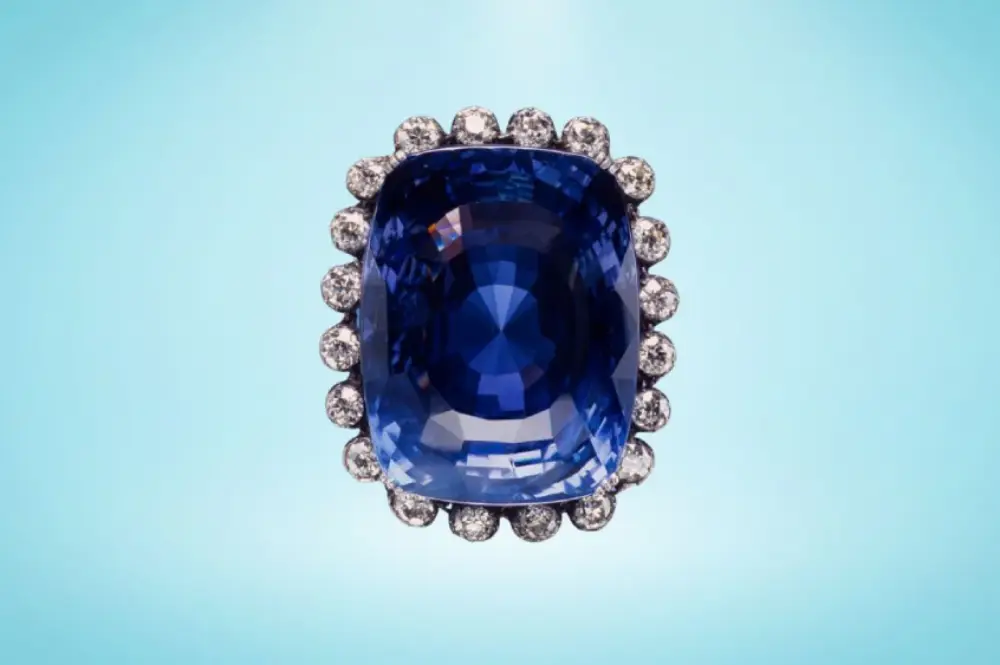
The Logan Sapphire at the Smithsonian Institution’s National Museum of Natural History is one of the largest faceted blue sapphires in the world, weighing 422.99 carats. Mined in Sri Lanka and set as a brooch surrounded by twenty round brilliant diamonds, the stone was donated to the Smithsonian in 1960 by Mrs. John A. Logan and remains one of the most photographed colored gemstones in any public collection. Its size alone makes it remarkable, but its medium-blue color and exceptional clarity for a stone of that magnitude are what give it institutional significance.
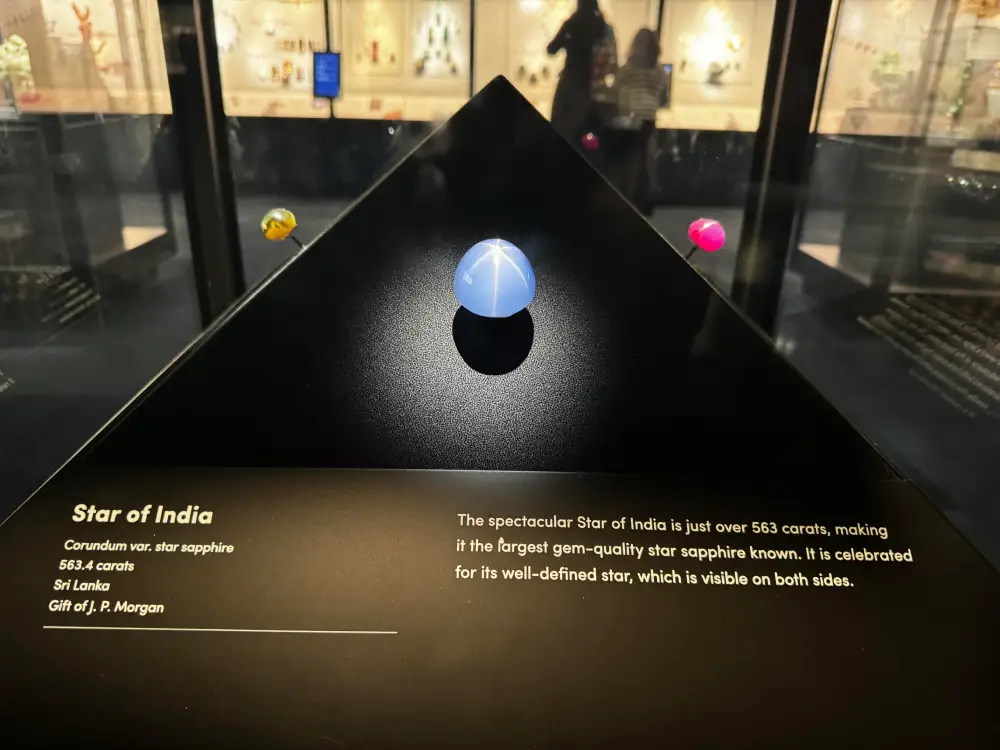
The Star of India, held by the American Museum of Natural History in New York, is a 563.35-carat star sapphire that has become one of the most recognized gemstones in popular culture. Donated by financier J.P. Morgan in 1900 and famously stolen in 1964 in a heist that recovered the stone two months later, the Star of India displays sharp asterism on both sides, an unusual characteristic that adds to its uniqueness. Its grayish-blue color is less prized than the saturated blues of investment-grade stones, but its size and the sharpness of its star place it in a category of its own.
The Star of Asia, also at the Smithsonian, is a 330-carat star sapphire from Burma’s Mogok Valley that displays a more saturated blue and a sharper, more centered star than the Star of India. Many gemologists consider it the finer of the two stones from a pure quality standpoint, though the Star of India has greater public recognition.
The Stuart Sapphire, set into the back of the Imperial State Crown of the United Kingdom, weighs 104 carats and carries provenance reaching back to Charles II. The St. Edward’s Sapphire, mounted at the cross above the Imperial State Crown’s Black Prince’s Ruby, is said to have been worn in a ring by Edward the Confessor in the eleventh century, making it one of the oldest documented gemstones in continuous royal possession anywhere in the world. These stones will never trade, but their existence informs the value of every historically significant sapphire that does come to market.
Auction Records That Set the Market
The Blue Belle of Asia remains one of the most consequential sapphire sales in modern auction history. The 392.52-carat Ceylon sapphire sold at Christie’s Geneva in November 2014 for approximately 17.3 million Swiss francs, or roughly 17.5 million United States dollars at the time. The price established a benchmark for large Ceylon sapphires and demonstrated the depth of demand for historically significant stones at the highest end of the market.
Kashmir sapphires have repeatedly broken per-carat records over the past two decades. A 27.68-carat Kashmir sapphire ring sold at Christie’s Hong Kong in 2015 for approximately 6.74 million United States dollars, working out to roughly 243,000 dollars per carat. Sotheby’s has handled multiple Kashmir sales in similar territory, and the trade understands that genuinely fine Kashmir material above ten carats now trades in a price range where comparable benchmarks must be established almost individually for each stone, because the supply is so limited that traditional comparable-sales analysis breaks down.
The Rockefeller Sapphire, a 62.02-carat rectangular step-cut Burmese sapphire originally purchased by John D. Rockefeller Jr. in 1934, sold at Christie’s in 2001 for over three million dollars and resurfaced at auction multiple times in subsequent decades, each appearance providing market data on how blue-chip Burmese material performs across economic cycles. Its trajectory illustrates a pattern common to investment-grade sapphires, where stones with documented historical provenance tend to appreciate steadily across multiple ownership cycles rather than experiencing the volatility characteristic of speculative assets.
Padparadscha sapphires have established their own record category. A 28.04-carat Sri Lankan padparadscha sold at Christie’s Hong Kong in 2017 for approximately 2.65 million dollars, and smaller stones of exceptional color regularly cross 20,000 to 30,000 dollars per carat. The category is small enough that any major sale immediately becomes a reference point cited in subsequent transactions for years afterward.
Why Provenance Multiplies Value
Beyond the inherent quality of the stone itself, provenance can substantially multiply auction prices. When a sapphire carries documented ownership history connecting it to royalty, prominent industrialists, or major historical figures, the premium can range from twenty percent to several hundred percent above the price the same stone would command without that history. The Duchess of Windsor’s jewelry collection, the Elizabeth Taylor sales, and the periodic appearances of pieces from European royal collections have all demonstrated that the market pays substantial premiums for documented provenance, and that those premiums tend to persist or grow across subsequent ownership cycles.
This dynamic matters for collectors at every price level, not just those operating in the seven-figure range. The same provenance principle scales down to mid-market and entry-level acquisitions. A Victorian sapphire ring with documented family history, original fitted box, and period appraisal documentation will command meaningfully more than an identical loose stone or unmounted setting. Building a collection means building documentation alongside it, and the records you keep today become the provenance that supports the value of your stones in the next generation’s estate. Reputable auction houses understand this dynamic, which is why catalog entries for important sapphires often run to multiple paragraphs of historical context. That context is not decoration. It is value documentation, and savvy buyers read it as carefully as they read the laboratory report.
The Investment Case for Sapphires in a Diversified Portfolio
The phrase “investment-grade gemstone” gets used loosely enough in the trade that serious buyers should approach it with a measure of skepticism. Not every sapphire is an investment, just as not every painting is fine art and not every house is real estate worth holding. What follows is the analytical case for sapphires as a portfolio asset, presented honestly, with the limitations and risks treated as carefully as the opportunities. Collectors who understand both sides make better decisions than those who hear only the optimistic version.
Performance Data and Market Tracking
The Knight Frank Luxury Investment Index, which tracks the performance of ten luxury asset categories including art, classic cars, watches, wine, and colored gemstones, has consistently shown colored stones among the better-performing categories across the past decade. Fine sapphires specifically have outpaced inflation by meaningful margins, with top-tier Kashmir and Burmese material appreciating at rates that compare favorably to blue-chip art and significantly exceed traditional fixed-income returns over the same periods. The AMR Gemstone Index and similar trade-tracking publications provide more granular data on per-carat price movements across origin and quality categories, and the long-term trend lines for fine unheated sapphires of classical origin have been steadily upward across multiple decades.
The performance is not uniform across the category. Mass-market commercial sapphires (heated Madagascar or Thai material in standard sizes and qualities) behave more like commodities, with prices fluctuating based on production volumes and consumer jewelry demand. The investment-grade tier, defined roughly as unheated stones of classical origin above three carats with strong color, behaves quite differently. This tier responds to the dynamics that drive other rare collectibles markets, including limited supply, growing global wealth, and the increasing share of Asian collectors entering the colored stone market over the past two decades.
Portfolio Characteristics
Sapphires offer several characteristics that make them genuinely useful for portfolio diversification. They have low correlation with equity markets, meaning their prices do not move in tandem with stock indices, which provides a hedge against broad market downturns. They are physical assets, which protects against currency debasement and inflation in ways that paper assets cannot match. They are portable and concealable, a characteristic historically valued by families with experience of political instability and one that continues to matter to collectors in regions where capital controls or geopolitical risks are present concerns. They are intergenerational, transferring through estates with relative simplicity compared to real estate or operating businesses, and they avoid many of the storage and authentication complications that affect art and wine collections.
The tax treatment of physical gemstones varies by jurisdiction, but in many countries personal-use jewelry receives more favorable treatment than financial assets, which can add meaningful after-tax returns for buyers who hold pieces as wearable jewelry rather than purely as investment instruments. Estate planning attorneys familiar with collectibles routinely incorporate fine gemstones into family wealth strategies precisely because of these characteristics, though buyers should always consult qualified counsel about the specifics of their own situations.
Liquidity Realities
Honesty about liquidity is essential. Sapphires are less liquid than publicly traded securities, full stop. A fine stone can typically be sold within three to nine months through major auction houses, and within days through dealer channels at meaningful discounts to retail value. This is faster than real estate liquidation in most markets and faster than most operating business sales, but slower than equity or bond positions. Buyers who may need rapid access to capital should not concentrate wealth in gemstones, just as they should not concentrate wealth in any illiquid asset class.
The auction market is the deepest exit venue for investment-grade material. Christie’s, Sotheby’s, Bonhams, Phillips, and the regional auction houses that specialize in fine jewelry all maintain active sapphire sales, and stones of significance routinely receive marketing attention that reaches global buyer networks. For collectors in the lower investment tiers, regional and online auction platforms provide additional liquidity channels, with the trade-off being smaller buyer pools and consequently more variable hammer prices. The general principle holds across the market: stones with strong color, classical origin documentation, and laboratory reports from respected institutions sell more readily and at higher percentages of estimated value than stones that lack any of those elements.
Entry Thresholds and Realistic Expectations
Honest entry thresholds matter for setting expectations. Genuine investment-grade sapphires generally start around 10,000 dollars for smaller stones with strong color and acceptable origin documentation. Meaningful Ceylon material in the two to four carat range with proper laboratory reports typically begins in the 15,000 to 50,000 dollar range. Burmese stones of comparable size and quality begin in the 50,000 to 150,000 dollar range. Kashmir material at any meaningful weight starts in six figures and quickly moves into seven. Fine padparadschas above three carats with strong color and Sri Lankan origin documentation likewise begin around 50,000 dollars and can multiply substantially from there.
These thresholds will frustrate buyers expecting to enter the investment tier at lower price points. The reality is that the market for sub-10,000 dollar stones is dominated by jewelry rather than investment dynamics, and buyers in that range should approach their purchases primarily as wearable assets rather than as portfolio holdings. There is nothing wrong with buying jewelry to wear and enjoy, and many such pieces hold value reasonably well, but conflating jewelry purchases with investment purchases leads to disappointment. Serious investment positioning requires serious capital, and buyers who lack that capital are typically better served by building expertise patiently and entering the investment tier when their resources align with the market’s actual entry points.
The most successful sapphire investors share a few common characteristics. They buy quality over quantity, preferring one excellent stone to several mediocre ones. They specialize, focusing on a particular origin, color family, or historical period rather than building scattered collections. They insist on documentation, refusing to acquire significant stones without independent laboratory reports and detailed provenance records. They hold for time horizons measured in years and decades, recognizing that the market rewards patience and punishes speculation. And they build relationships with reputable auction houses, dealers, and gemologists, understanding that the colored stone market is fundamentally a relationship business in which trust and repeated transactions create access to the best material before it appears in public sales. Buyers who follow these principles tend to do well over time. Buyers who treat sapphires as quick speculative plays generally do not.
How to Acquire Authentic Sapphires at Auction Without Costly Mistakes
Knowledge of varieties, grading, market history, and investment dynamics matters only if it translates into better acquisition decisions. The auction floor is where theory meets practice, and it is also where collectors with strong general knowledge but weak procedural discipline make their most expensive mistakes. The principles that follow are drawn from how serious buyers actually operate at major sales, and from the patterns we see at HeritageBids when consigned sapphires move through our jewelry auctions to new collections.
Laboratory Certification: The Non-Negotiable Foundation
No sapphire above a few thousand dollars should be acquired without an independent laboratory report from a respected institution. The hierarchy that the trade actually uses is fairly settled. SSEF (Swiss Gemmological Institute) in Basel and Gübelin Gem Lab in Lucerne are the two Swiss laboratories whose origin determinations carry the greatest weight at international auction, particularly for Kashmir, Burmese, and other classical-origin stones. Their reports often add measurable percentages to hammer prices simply by their presence. AGL (American Gemological Laboratories) in New York is the leading American laboratory for colored stone work and produces reports that the trade respects globally. GIA (Gemological Institute of America) reports are universally recognized and provide the most accessible documentation for buyers in the United States, though for the highest-end origin determinations the Swiss labs typically carry incremental weight.
Reports from unfamiliar laboratories should be treated with caution. The colored stone industry has seen the proliferation of small labs whose reports use authoritative-looking formats but whose methodology and reputation do not support the conclusions they reach. As one veteran New York colored stone dealer put it during a panel at a recent industry conference, “The report is only as valuable as the laboratory behind it. A piece of paper from a lab nobody respects is worth less than the postage that sent it.” That assessment captures the trade consensus accurately. When in doubt, buyers can request that a stone be re-examined by a top-tier laboratory before completing the transaction, and reputable auction houses will accommodate such requests for significant lots.
Recognizing Red Flags Before They Cost You
Several patterns reliably indicate that a sapphire transaction deserves additional scrutiny or outright avoidance. Vague provenance language (“from a private European collection” with no further detail) does not constitute documentation. Single-lab reports from unknown laboratories, particularly when the seller resists submission to a major lab for verification, suggests the seller knows the stone will not survive serious examination. Prices significantly below market comparables almost always indicate that something is missing from the picture, whether undisclosed treatment, questionable origin, or simply inflated grading on the report. Marketing language emphasizing “investment grade” without substantive backing in the form of independent documentation, comparable sales data, and clear treatment disclosure should prompt immediate skepticism. The colored stone market is mature enough that genuinely good deals on legitimate material are rare, and the appearance of a too-good-to-be-true price almost always reflects the reality that something is wrong with the stone, the documentation, or the seller.
At HeritageBids, we generally advise prospective bidders to apply a simple rule: if you cannot articulate why a particular sapphire is priced where it is, do not bid on it. Every fine stone in a serious auction has a price logic that connects its origin, color, clarity, weight, treatment status, and provenance to its estimate range. If you cannot reconstruct that logic from the catalog entry and laboratory report, either the stone is not what it appears to be or you have not done enough research to bid responsibly.
Auction-Specific Strategy
The mechanics of bidding deserve as much preparation as the gemological research. Set your maximum bid before the sale begins, calculated to include the buyer’s premium and any applicable taxes, and do not exceed it under any circumstances. The single most common mistake auction newcomers make is allowing the competitive dynamics of live bidding to push them past their pre-set limits, and the resulting purchases are almost always the ones they regret six months later.
Request condition reports and additional photographs for any lot you are seriously considering. Reputable auction houses, including HeritageBids, provide detailed condition reports on request and will arrange additional images, video, or in some cases video calls during which a specialist examines the stone live for remote bidders. Use these resources. The catalog photograph is necessarily a single representation of a three-dimensional object whose appearance changes substantially under different lighting conditions and viewing angles, and the additional documentation often reveals characteristics (positive or negative) that the catalog image cannot convey.
Attend preview sessions when geography permits. There is no substitute for examining a stone in person under multiple lighting conditions, and serious sapphire buyers routinely travel to preview sessions for important sales precisely because the in-person examination consistently produces information that no photograph or report can replicate. For collectors who cannot attend, the next best practice is to engage an independent gemologist to attend on your behalf and provide an unbiased assessment, particularly for purchases above the 25,000 dollar range.
Understand the buyer’s premium structure for each auction house you bid through. Premiums typically range from 20 to 27 percent of the hammer price for jewelry auctions, and they materially affect the total cost of acquisition. A stone with a hammer price of 40,000 dollars at a house with a 25 percent buyer’s premium actually costs 50,000 dollars before any applicable sales tax, and bidders who fail to account for this routinely exceed their intended budgets.
Building a Collection That Holds Its Value
The collectors whose holdings appreciate most reliably share a discipline that is easy to describe and difficult to practice. They specialize rather than diversify within the category, focusing perhaps on Ceylon sapphires with documented colonial-era provenance, or on Montana stones in their natural unheated state, or on Edwardian-period sapphire jewelry in original settings. Specialization builds expertise faster than scattered acquisition, and expertise is what allows collectors to recognize undervalued opportunities and avoid overpriced ones. As the late jewelry historian Vivienne Becker observed in her writing on collecting, connoisseurship is built one stone at a time, and the collection itself becomes the record of the eye that assembled it.
Buy the best stone you can afford rather than several mediocre ones. The market for fine material is fundamentally different from the market for commercial material, and the appreciation curves diverge significantly over time. A single 50,000 dollar sapphire of investment-grade quality will outperform five 10,000 dollar commercial stones over a fifteen-year holding period in almost every scenario. The discipline of resisting the urge to acquire frequently in favor of acquiring well is what separates collections that build wealth from collections that drain it.
Maintain meticulous documentation from the moment of purchase. Original laboratory reports, auction catalog entries, condition reports, photographs, insurance appraisals, and any provenance materials should be preserved together in both physical and digital form. The next generation that inherits or receives your collection will need this documentation to realize its full value, and the absence of records can reduce a stone’s marketable value by 30 percent or more even when the stone itself is unchanged. At HeritageBids, the consignments that move most efficiently through our jewelry sales are invariably those that arrive with complete documentation packages, and the consignors of those pieces consistently realize stronger results than those whose stones lack supporting paperwork.
Finally, build relationships with the auction houses, dealers, and gemologists whose judgment you come to trust. The colored stone market remains, at its core, a relationship business. Buyers who become known to specialists at major houses receive earlier notification of significant consignments, more thorough condition information, and access to private treaty sales that never appear in public catalogs. These relationships compound over time, and the collectors who have built the strongest holdings are almost without exception those who have invested as much in their professional relationships as in the stones themselves. The sapphire you acquire today is one element in a longer arc of collecting that, properly conducted, becomes both an aesthetic pursuit and a financial inheritance worth passing on.