A rug condition report describes the wear, repairs and other condition issues noted in a particular rug. Before bidding at auction, ask about the pile, foundation, ends, sides, restoration and any stains or odors. Read the answers alongside detailed photographs: a short description such as “good condition” cannot tell you whether a rug suits your intended use.
The most useful question is specific: “Is the foundation exposed in the center?” will usually give you more information than “Is it in good shape?” This guide provides a practical request checklist for buyers considering antique, vintage or modern rugs.
Rug condition report checklist: 8 essential checks
Start by identifying the lot number and sale. Then ask for observations about the areas below. If an area has not been examined, that should remain an unanswered question rather than being treated as confirmation that no issue exists.
| Area to check | Question to ask before bidding | Photograph to request |
|---|---|---|
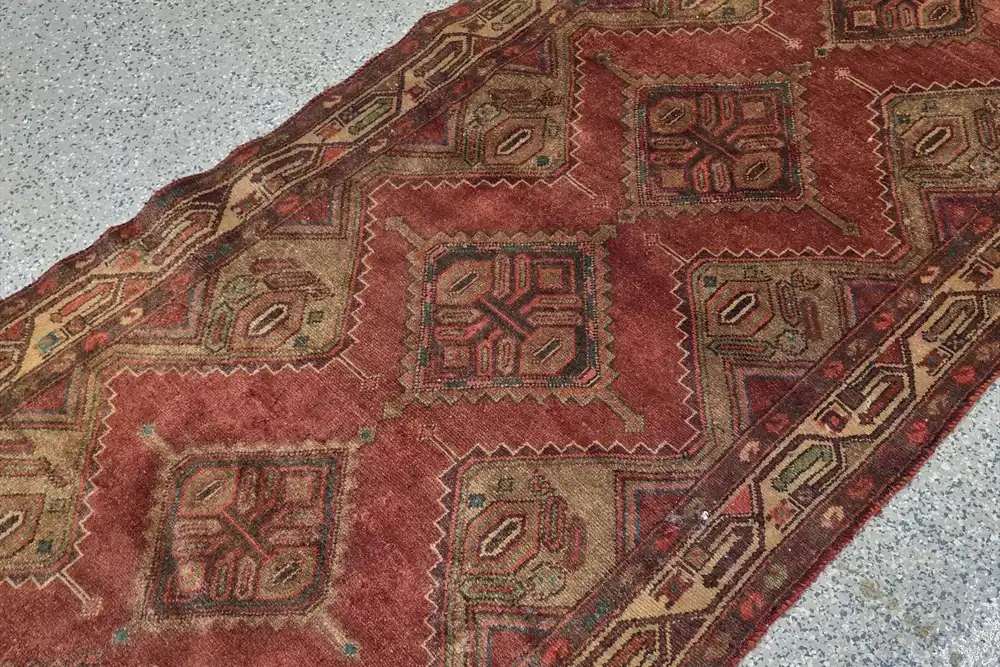
| Pile | Is the pile even, low or missing in particular areas? | Close views of the center, corners and any worn patches |
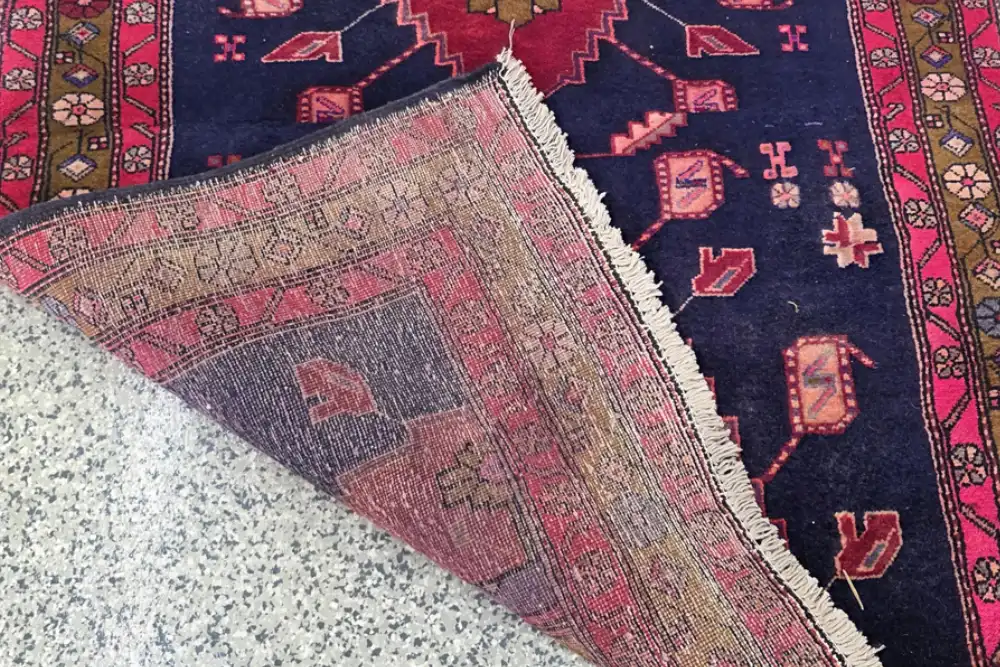
| Foundation | Are there visible splits, holes, brittleness or exposed foundation threads? | Front and back of the affected area |
| Ends | Are both ends complete and secured? Is any woven design missing? | Full-width views of both ends |
| Sides | Are the side edges intact, repaired or unraveling? | Close views along both sides |
| Repairs | Where are repairs, and approximately how large are they? | Matching front and back views of each repair |
| Surface and color | Are stains, discoloration, color bleeding or applied color noted? | Overall and close views in even lighting |
| Odor and cleaning | Has odor been checked, and is recent cleaning documented? | Written clarification; photographs cannot establish odor |
| Shape and dimensions | Are the measurements current, and does the rug lie flat? | A straight-on overall view, with measurements confirmed |
Read wear and restoration separately
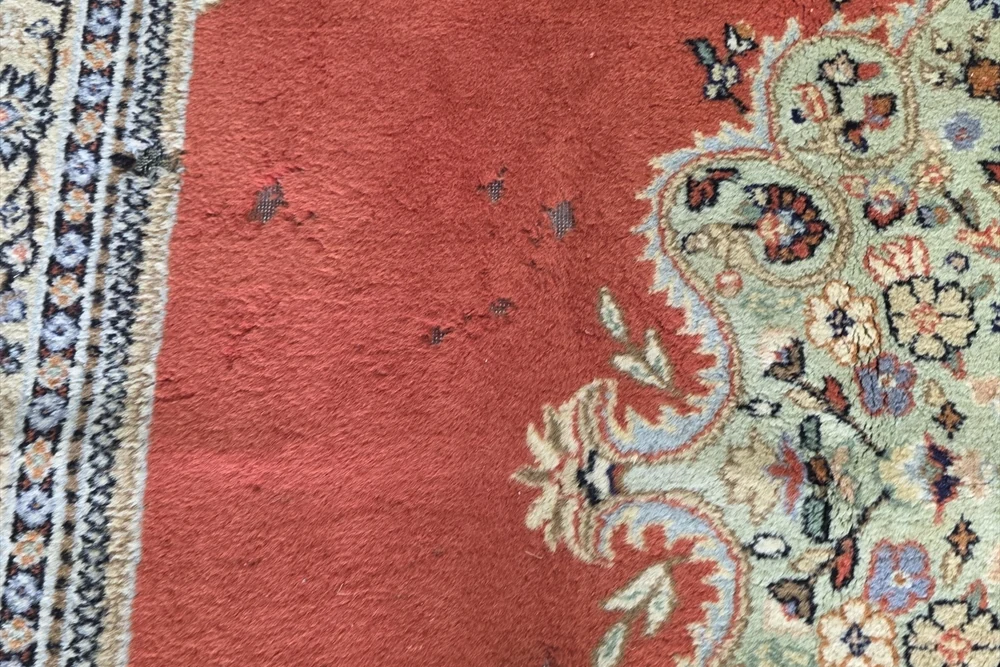
Wear describes material that has diminished through use. Restoration describes work undertaken to repair or alter an area. A rug can have both. Ask the auction house to identify their locations separately so you can understand what remains original and what has been worked on.
For example, “low pile in the center; repaired corner” raises two different questions: how extensive is the central wear, and what does the corner repair involve? Request photographs of both areas. Do not assume that one close-up represents the condition of the entire rug.
A repair does not automatically make a rug unsuitable. Your intended use matters: a piece you hope to place in a busy hallway needs a different assessment from one intended for display. If suitability depends on structural strength, seek an assessment from someone able to examine the rug in person.
Do not rely on “good condition for its age” alone
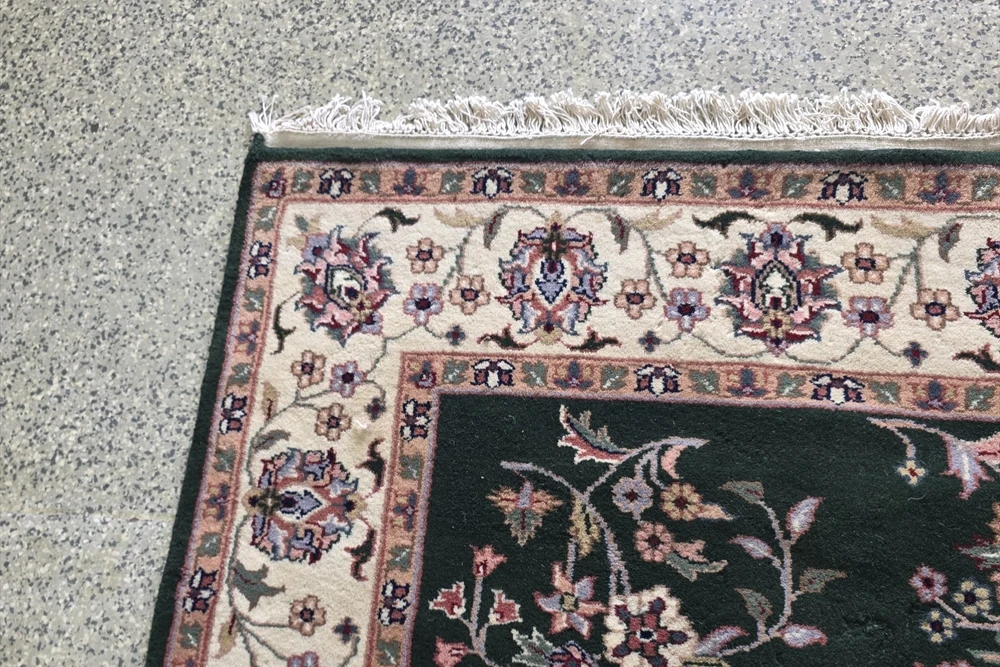
That phrase expresses an overall opinion without identifying specific issues. Follow it with questions about missing areas, repairs, end losses and visible foundation. Similarly, “full pile” addresses the pile, but does not answer questions about stains, odor or the reverse.
A useful reply might read: “Pile is lower through the central field; both ends are secured; a repair is visible at one corner.” This is an illustrative example, not a report on a HeritageBids lot. It gives a buyer identifiable areas to investigate.
Condition also belongs in the wider evaluation of a rug. Design, size, attribution and other characteristics matter too; our guide to what makes a Persian rug valuable explains that broader context.
Which additional photographs should you request?
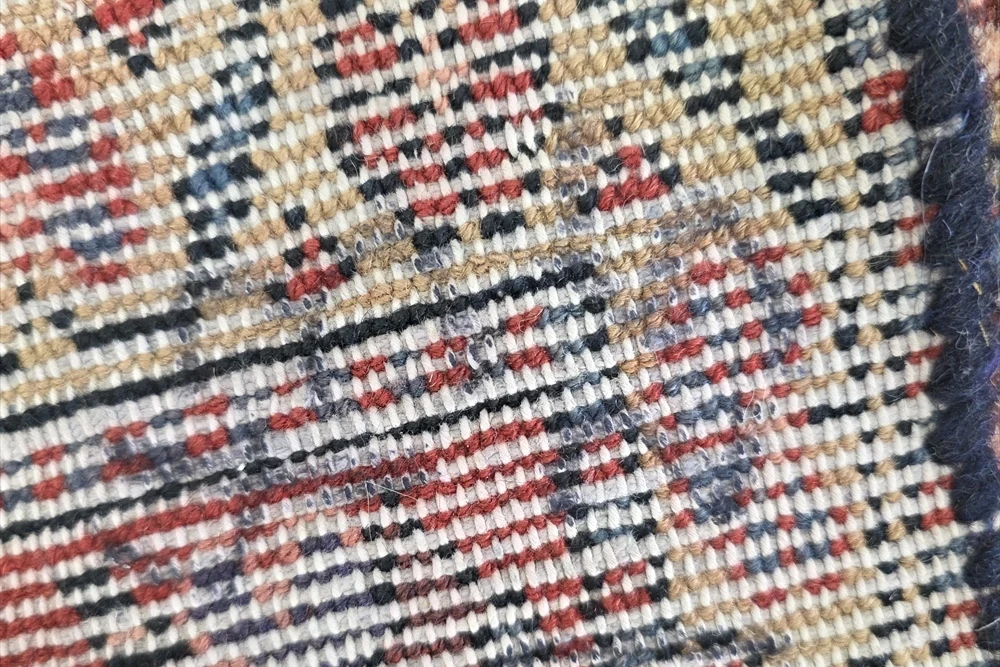
Begin with an overall photograph showing the whole rug, then ask for the reverse, both ends, both sides and close-ups of any reported issues. When requesting a repair photograph, ask the seller to identify where the area sits within the overall design.
Photographs are evidence of visible appearance, not a complete physical examination. They cannot confirm odor, and lighting or screen settings can affect perceived color. If a particular shade matters for your room, ask for additional photographs in neutral daylight while recognizing that an exact screen-to-rug color match is not assured.
For a concrete catalog example, open lot 247, an antique Persian Malayer carpet in the HeritageBids catalog. Use the lot number when asking questions about that rug. The checklist here is not a condition assessment of that lot.
A rug condition report request you can copy
Hello, I am considering lot [number] in your [sale date] auction. Could you please confirm the extent of pile wear; any holes, splits or exposed foundation; whether the ends and sides are complete and secured; and the location and approximate size of any repairs?
Please also clarify any noted stains, odor or color alteration, and send photographs of the reverse, both ends and any affected areas. Has the rug been physically examined, or is the report based on photographs and information supplied by its owner? I intend to use it in [room or setting]. Thank you.
For general auction guidance, the saleroom explains what a condition report covers and recommends asking the auctioneer for specific information and additional photographs.
Send the request sufficiently ahead of the auction to allow for a response and follow-up photographs. If a point that matters to your decision remains unanswered, take that uncertainty into account before setting your bid.
How condition requests work with virtual consignment
HeritageBids uses virtual consignment: items remain with their consignors until sold. Ask about the location of the particular lot and the basis of the condition information available. When possible, HeritageBids can arrange a preview at the consignor’s location. A preview is subject to arrangements for that item; it should not be assumed to be available at a central showroom.
Buyers pay shipping and insurance. Request the shipping information for the lot before bidding, and consider any anticipated cleaning or repair work alongside the purchase cost. Read our guide to bidding at HeritageBids for the buying process.
Frequently asked questions
Is a rug condition report the same as an appraisal?
No. A condition report describes the rug’s observed state. An appraisal addresses value for a stated purpose. A report on wear and repairs alone does not establish market value or authenticate an attribution.
Does the absence of a condition report mean the rug is undamaged?
No. If the catalog does not discuss condition, request clarification. An omitted description is not evidence that the rug is free from issues.
Can I rely on the photographs alone?
Photographs help you inspect visible details, but some questions require a written response or physical examination. Combine the images with the condition report and review the auction’s terms before bidding.
Should I avoid every rug with restoration?
No. Ask what was restored, where, and how extensively. Then consider whether the condition, price and intended use make sense for you. There is no single discount that applies to every repaired rug.
Browse HeritageBids auction catalogs and identify the lots you would like to investigate before placing a bid.