How to authenticate antique Persian Rugs
For serious collectors and discerning investors, few acquisitions carry the cultural weight and enduring value of an authentic antique Persian rug. These masterpieces of textile art represent centuries of tradition, painstaking craftsmanship, and artistic heritage that simply cannot be replicated by modern manufacturing. However, as the market for antique Persian rugs continues to thrive, so too does the prevalence of reproductions, misattributed pieces, and outright forgeries.
At Heritage Bids, we believe that knowledge is the collector’s most powerful tool. Whether you are evaluating a piece at auction, considering a private sale, or assessing a family heirloom, understanding how to authenticate antique Persian rugs is essential to making confident, informed decisions. In this comprehensive guide, we walk you through the key indicators of authenticity that experts rely on every day.
1. Examine the Knot Structure and Weaving Technique
The foundation of any authentic antique Persian rug lies in its knot structure. Genuine Persian rugs are hand-knotted using one of two primary knot types: the asymmetric (Senneh) knot and the symmetric (Ghiordes) knot. While both appear in Persian weaving traditions, the asymmetric knot is far more prevalent in rugs originating from Iran and is often considered a hallmark of Persian craftsmanship.
To inspect the knot structure, gently fold the rug back on itself and examine the base of the pile with a magnifying glass. In a hand-knotted rug, you will observe slight irregularities — tiny variations in knot size, spacing, and tension that are the unmistakable fingerprints of human hands at work. Machine-made rugs, by contrast, display perfectly uniform rows with mechanical precision that lacks the organic character of handcrafted work.
What to Look For
- Knot density: Authentic Persian rugs typically range from 80 to over 800 knots per square inch, depending on the region and workshop. Higher knot counts generally indicate finer craftsmanship and greater value.
- Back of the rug: Turn the rug over and study the reverse side. On a genuine hand-knotted piece, the pattern should be clearly visible on the back, though slightly less defined than the front. Machine-made or hand-tufted rugs often have a flat, uniform backing or a canvas layer glued in place.
- Fringe integrity: The fringe on an authentic Persian rug is a structural extension of the warp threads — it is not sewn or glued on after the fact. Gently tug on the fringe to ensure it is continuous with the body of the rug.
2. Analyze the Materials: Wool, Silk, and Natural Dyes
The materials used in an antique Persian rug tell a profound story about its origin, age, and authenticity. Traditional Persian weavers used hand-spun wool, natural silk, and occasionally cotton for the foundation. Each of these materials has distinct characteristics that set them apart from modern synthetic alternatives.
The Touch Test
Run your hand across the surface of the rug. Authentic hand-spun wool has a slightly uneven, organic texture with a natural lanolin sheen that develops a beautiful patina over decades. Synthetic fibers, on the other hand, tend to feel uniformly smooth, sometimes plasticky, and may have an artificial luster that appears too consistent under light.
Identifying Natural Dyes
One of the most telling indicators of an authentic antique Persian rug is the use of natural vegetable and mineral dyes. These dyes — derived from sources such as indigo, madder root, pomegranate rind, and saffron — produce colors that age gracefully, developing a rich, harmonious quality known as abrash. Abrash refers to the subtle, natural variations in color that occur when different batches of hand-dyed yarn are woven into the same rug.
To test for natural dyes, examine the rug under natural daylight. Authentic antique dyes will show gentle tonal variations within the same color field. Synthetic dyes, introduced widely in the late 19th century, tend to produce flat, uniform hues that may fade unevenly or develop a harsh, washed-out appearance over time. A more definitive test involves dampening a small area of white cloth and pressing it against the rug — natural dyes generally resist bleeding, while certain early synthetic dyes may transfer color.
3. Identify the Regional Origin and Design Motifs
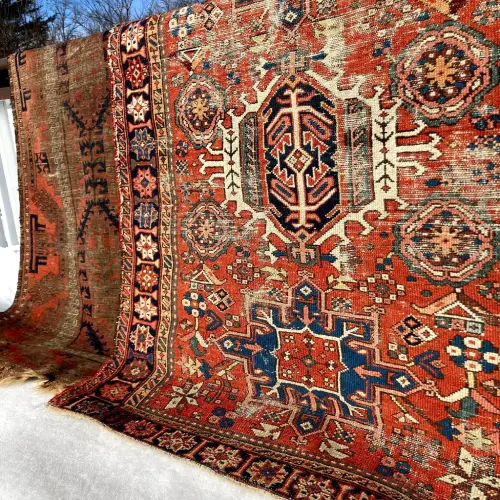
Every authentic antique Persian rug carries the visual language of the region, tribe, or workshop where it was created. Understanding these regional signatures is critical for authentication and can also significantly affect a rug’s market value.
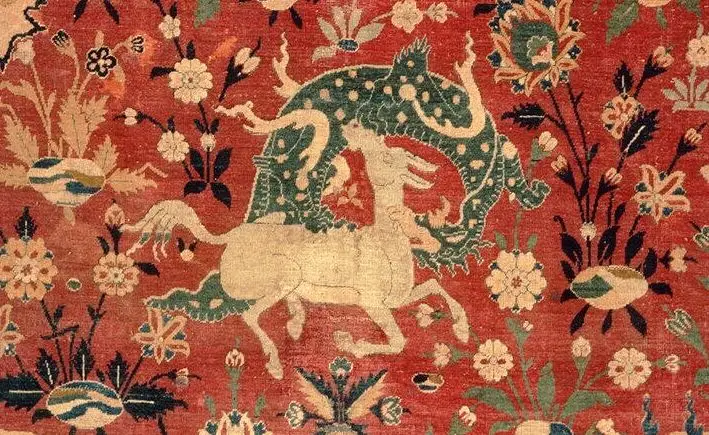
Major Persian Rug-Producing Regions
- Isfahan: Known for exceptionally fine knotting, elaborate curvilinear designs, and a central medallion motif, Isfahan rugs are among the most prized in the world.
- Tabriz: Versatile in design, Tabriz rugs may feature hunting scenes, garden motifs, or geometric patterns, often with a distinctive double-knotting technique.
- Kashan: Celebrated for their rich reds and blues, Kashan rugs frequently display intricate floral arabesques and a classic central medallion on a dense, tightly knotted foundation.
- Heriz: Bold geometric medallions, strong angular lines, and a robust, durable weave define the iconic Heriz style originating from northwestern Iran.
- Kerman: Renowned for their elaborate, pictorial designs and pastel color palettes, Kerman rugs represent some of the most artistic achievements in Persian weaving.
An experienced appraiser can often determine a rug’s origin within minutes by analyzing the combination of design motifs, color palette, knot type, and foundation material. If a rug’s attributed origin does not align with these structural and aesthetic markers, it raises immediate red flags regarding authenticity.
4. Assess Age Through Wear Patterns and Provenance
Determining the age of a Persian rug is both an art and a science. While advanced laboratory methods such as carbon-14 dating and fiber analysis can provide definitive results, experienced collectors and appraisers often rely on a combination of visual assessment and provenance research.
Signs of Genuine Age
- Consistent, even wear: An authentically aged rug shows wear that corresponds to natural use patterns — slightly more worn in high-traffic areas, with a softened pile that feels supple rather than brittle.
- Oxidation: Certain dye colors, particularly dark browns and blacks, may show signs of oxidation where the pile has worn down slightly more than surrounding areas. This is a natural chemical process that occurs over many decades.
- Patina: Genuine antique rugs develop a luminous, mellow quality to their colors that simply cannot be artificially replicated with any degree of convincing accuracy.
The Importance of Provenance
Provenance — the documented history of ownership and origin — is one of the most powerful tools for authentication. At Heritage Bids, we meticulously research and document the provenance of every antique Persian rug in our catalog. A well-documented chain of ownership that traces back to a known dealer, estate, or collection adds tremendous confidence in a piece’s authenticity and can substantially increase its auction value.
Be cautious of sellers who cannot provide any provenance information or who offer vague, unverifiable claims about a rug’s history. While the absence of documentation does not automatically indicate a forgery, it does warrant additional scrutiny and expert evaluation.
5. Seek Professional Appraisal and Certification
Even the most knowledgeable collectors benefit from professional authentication services. The complexities of antique Persian rug identification — from distinguishing between closely related regional styles to detecting sophisticated modern reproductions — demand the trained eye of a certified appraiser.
When seeking professional authentication, look for appraisers who hold credentials from recognized organizations such as the American Society of Appraisers (ASA), the Appraisers Association of America, or specialists affiliated with major auction houses. A thorough appraisal should include detailed analysis of the rug’s materials, construction, design attribution, condition, estimated age, and fair market value.
At Heritage Bids, our team of expert appraisers brings decades of combined experience to every evaluation. We employ both traditional assessment techniques and modern analytical tools to ensure that every piece we present meets the highest standards of authenticity and quality.
Conclusion: Invest with Confidence
Authenticating an antique Persian rug requires a careful blend of knowledge, observation, and expert guidance. By examining the knot structure, analyzing materials and dyes, identifying regional design signatures, assessing age indicators, and seeking professional certification, collectors can navigate the market with confidence and discernment.
The rewards of owning an authentic antique Persian rug extend far beyond financial investment. These extraordinary textiles are living artifacts of human creativity — each knot tied by hand, each color drawn from the earth, each pattern carrying the artistic legacy of generations. When you acquire an authenticated piece through Heritage Bids, you are not simply purchasing a rug; you are becoming the custodian of a cultural treasure.
Explore our current antique Persian rug collection and discover pieces with verified provenance, expert authentication, and the timeless beauty that only genuine craftsmanship can deliver.